|
All-Music
Guide
Born: Sept. 28, 1930 in Bethany, OK
Died: March 14, 2000 in Ashland City,
TN
Along with his contemporary Wynn Stewart,
Tommy Collins was one of the first country musicians to establish a distinctive
Bakersfield, California sound. During the course of the '50s, he released
a series of hit singles that lightened up the tone of honky tonk with bouncing
back beats, novelty lyrics and electric guitars. Collins explored a more
serious side with his ballads, yet they continued to sound slightly different
than his peers -- though they weren't as polished as the countrypolitain
coming out of Nashville, they didn't have the grit of honky tonk. Legions
of West Coast country performers -- most notably Buck Owens, who played
guitar on several of Tommy's hit singles, and Merle Haggard -- built on
the sound that Collins established in the early '50s. Collins wasn't able
to cash-in on the Bakersfield craze of the '60s. By then, he had already
quit the music business once, and was mounting a marginally successful
comeback. Nevertheless, his influence loomed large, particularly on Haggard,
who took Collins' "Carolyn" and "The Roots of My Raising" to the top of
the charts in the early '70s.
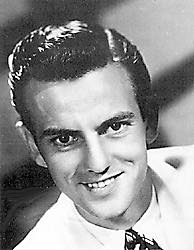
Collins (b. Leonard Raymond Sipes)
was born just outside of Oklahoma City, spending his entire
childhood in Oklahoma, where his
father worked for the county. As a child, he began to sing and write songs,
eventually appearing on local radio shows. Following his high-school graduation
in 1948, he attended Edmond State Teachers College while he continued to
perform music. During this time, he made a handful of singles for the California-based
record label, Morgan. In the early '50s, he was in the army for a brief
time, before he moved to Bakersfield, California with his friend Wanda
Jackson and her family. Shortly afterward, the Jackson family moved back
to Oklahoma, leaving Tommy Collins alone in Bakersfield.
In a short time, Collins had begun
to make friends and contacts within the city, eventually becoming friends
with Ferlin Husky and the pair roomed together. After recording a handful
of Collins' songs, Husky convinced his record company, Capitol, to offer
Tommy a record contract and the fledging singer/songwriter signed to the
label in June of 1953; at the time of signing, he adopted his stage-name
of Tommy Collins, since it sounded more commercial than Leonard Sipes.
Capitol and Tommy immediately assembled a backing band, which featured
a then-unknown Buck Owens on lead guitar. Following one unsuccessful single,
Collins' released the jaunty "You Better Not Do That," which became a huge
hit in early 1954, spendind seven weeks at number two on the country charts.
Since the song was a success, Collins continued to pursue a light-hearted,
near-novelty direction with his subsequent hits and the formula initially
worked. Between the fall of 1954 and the spring of 1955, he had three Top
10 hits -- "Whatcha Gonna Do Now," "Untied," "It Tickles" -- and in the
fall of 1955, the double A-sided single "I Guess I'm Crazy" and "You Oughta
See Pickles Now," which both reached the Top 15. In addition to these hit
singles, Faron Young had a huge hit with Tommy's "If You Ain't Lovin',"
which was one of many songs that Collins wrote but didn't record that became
hits.
Collins was on the fast road to major
success, but it stopped just as soon as it began. Tommy had a religious
conversion in early 1956, and much of the material he recorded that year
was sacred music; occasionally, he recorded duets with his wife Wanda Lucille
Shahan as well. In 1957, Collins enrolled in the Golden Gate Baptist Seminary
with the intention of becoming a minister. Two years later, he became a
pastor. During all of his religious teachings, Collins continued to record
for Capitol, but neither himself or the label were much interested in promoting
his records, and he had no hits. When his contract with the label expired
in 1960, he stopped recording and enrolled as a student at Sacramento State
College. For the next two years, he studied at the university.
In early 1963, Collins decided he
was unfulfilled by the ministry, so he left the church and headed back
to Bakersfield with the intention of re-entering the music business. Capitol
agreed to re-sign him and in 1964, he returned to the lower reaches of
the charts with "I Can Do That," a duet with his wife Wanda.
With the help of Johnny Cash, Collins
switched labels and signed with Columbia in 1965; the following year, he
had a Top 10 hit with "I Can't Bite, Don't Growl." For the next few years,
he had a string of minor hit singles, none of which cracked the country
Top 40. During this time, he also toured with his protegees, Buck Owens
and Merle Haggard, acting as their opening act. By the early '70s, both
Collins' professional and personal lives were on the verge of collapse,
due to his increasing dependency on drugs and alcohol. In 1971, Wanda filed
for a divorce, sending Tommy into a deep depression.
Collins began to recover by continuing
to write songs, many of which were recorded by Merle Haggard, including
the 1972 number one hit single "Carolyn." In 1976, Tommy moved to Nashville,
where he was able to secure a contract with Starday Records. Later that
year, he released Tommy
Collins Callin', a collection of his own
versions of songs he had provided for other artists. Following
the album's reelase, Tommy turned almost
entirely to professional songwriting. In 1981, Merle Haggard had a hit
single with "Leonard," his tribute to Collins. After the release of "Leonard,"
the spotlight again turned to Collins, who was now sober. Tommy signed
a songwriting contract with Sawgrass Music, where his most notable success
was Mel Tillis' Top 10 1984 hit, "New Patches."
Throughout the '80s, Collins kept
a low profile, though his songs continued to be recorded. George Strait
recorded no less than two of Tommy's compositions during the decade, taking
his new version of "If You Ain't Lovin'" to number one on the country charts.
European record companies like Bear Family began reissuing his recordings,
which led to an appearance at the 1988 Wembley Country Music Festival in
England. In 1993, Collins signed a new publishing contract with Ricky Skaggs
Music and continued to write songs professionally throughout the mid-'90s.
-- Stephen Thomas
Erlewine, All Music Guide |
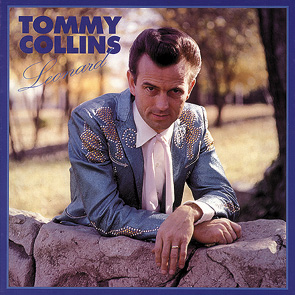
 --Tommy
Collins discography
--Tommy
Collins discography