NEW
YORK (AP) - Stanley Turrentine, a jazz saxophonist whose hit "Sugar'' established him in the popular mainstream
and influenced musicians in many other genres, died Tuesday. He was 66.
Turrentine
died at a New York hospital two days after suffering a stroke, said his agent, Robin Burgess. He lived in
Fort Washington, Md., outside Washington, D.C.
Turrentine,
who played tenor saxophone, mixed jazz with blues, rock, rhythm and blues and pop.
"His
impact on jazz was just astonishing,'' Burgess said. "He had a large impact on fusion, electric jazz and organ trio
music.''
Turrentine
started his career playing with Ray Charles and Max Roach. He scored his biggest hit in 1970 with "Sugar,''
which became something of a jazz standard, frequently performed and re-recorded by
admirers.
He
grew up in Pittsburgh, surrounded by music. The piano player Ahmad Jamal lived nearby, and often visited to practice
on the Turrentines' upright piano. Stanley's mother played piano, his father played
tenor sax and his brother Tommy played trumpet. The brothers played at the Perry Bar in
Pittsburgh, their first professional gig, while they
were still in high school, and often performed together as adults.
Turrentine
began traveling with a band when he was 16, and later joined one of Charles' early rhythm and blues groups.
He played in a jazz band headed by Roach and replaced the departing John Coltrane
in Earl Bostic's band.
Turrentine
went solo in the 1960s. His blues-influenced riffs brought him commercial success with albums such as ``Stan 'The
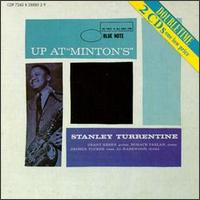
Man' Turrentine,'' ``Up at Minton's,'' and "Never Let Me Go.'' When "Sugar''
brought him fame outside the jazz world, some fellow musicians accused
him of abandoning artistry to pander to popular taste.
He
said he preferred mixing genres to being boxed in.
"One
day, my stepson and I were alphabetizing my albums over the years, and I noticed that they categorized me as
a rock and roll player on certain albums, a bee-bop player on other albums, a pop player,
a fusion player,'' he once said. "And I'm just saying...'Gee, I'm just playing with different
settings, but I'm still playing the same way.'''
Monday, September 18
Vistation 2PM-9PM
West Funeral Home
2215 Wylie Avenue
Pittsburgh, PA 15219
Tuesday, September 19
Funeral Service 11AM
Macedonia Baptist Church
2225 Bedford Avenue
Pittsburgh, PA 15219
Burial at the Alleghany Cemetary,
Lawrenceville, PA
In lieu of flowers , Judith Turrentine
asks that donations be made to the American Diabetes Association,
300 Penn Center Boulevard, Suite 700,
Pittsburgh, PA 15235. The donation should be noted to the ADA as
follows: In Memory of Stanley Turrentine, c/o Burgess Management, 3225
Prytania Street, New Orleans, LA 70115.
Stanley
Turrentine, Soulful Tenor Saxophonist, Dies At 66
Stanley Turrentine, one of the most compelling
exponents of the 1960s soul-jazz sound, died Tuesday (Sept.
12) in New York, after suffering a stroke. He was 66.
Turrentine cast a spell over listeners
with a tenor saxophone sound that fell somewhere between the
raw growls of R&B and the sinuous sounds of post-bop jazz. He
was ever ready to blend that jazz with pop and soul styles, and
found his greatest success with combination on his 1970 hit "Sugar." He
recorded about 50 albums in a career that spanned as many years, and
played countless sessions, including some with greats Max Roach,
Horace Silver, Jimmy Smith, Tadd Dameron, Les McCann, Donald Byrd,
Freddie Hubbard, and Kenny Burrell. Turrentine also accompanied
organist Shirley Scott, to whom he was married from 1961 to 1971.
Stanley Turrentine was born April 4, 1934 in
Pittsburgh, the son of an
amateur saxophonist, who taught Stanley how to play the tenor. (Stanley's older brother, Tommy Turrentine, would achieve fame
as a jazz trumpeter.) While still a teenager, Stanley Turrentine joined up with Lowell Fulson's band (which featured pianist
Ray Charles), then moved on to the R&B big band of Earl Bostic, where he replaced that group's distinguished alumnus, John Coltrane. But Turrentine was no mere honker, as some of his earliest
recording sessions were for innovative percussionist Roach, which also featured Tommy Turrentine.
Between 1960 and 1969, Turrentine recorded a
series of albums for Blue
Note that cemented his reputation in the soul-jazz world, in which that label played a crucial role. (Turrentine's Blue Note sets featured such accompanists as Herbie Hancock, McCoy Tyner, Roland Hanna, Horace Parlan, Grant Green, and many others.) Then, in 1970, Turrentine signed to producer Creed Taylor's CTI
label, which released his top-selling debut album, Sugar, which featured his high-profile labelmate George Benson.
Turrentine remained quite active over the years,
recording for Columbia,
Fantasy, Elektra, Music Masters, and even Blue Note again,
and maintained a full concert schedule. He was preparing for upcoming
appearances when he was felled by the stroke that would
swiftly claim his life.
Stanley Turrentine is survived by his wife
Judith. A funeral service will
be held Tuesday (Sept. 19) at 11:00 AM at the Macedonia Baptist Church in Pittsburgh. Judith Turrentine urges that in lieu of flowers,
donations be made to the American Diabetes Association, 300
Penn Center Boulevard, Suite 700, Pittsburgh, PA 15235. The donation
should be noted to the ADA as follows: In Memory of Stanley Turrentine, c/o Burgess Management, 3225 Prytania Street,
New Orleans, LA 70115.
-- Drew Wheeler, All Star News
Stanley Turrentine
had already established his credentials as a lyrical and inventive bop
and soul jazz saxophonist by the time
his music found a much wider audience in the wake of his crossover hit
with his own composition “Sugar” in 1970. Turrentine went on to enjoy several more such hits
in a pop-jazz vein in the ensuing years, but returned to a straightahead
jazz idiom in the
late-80s. Whatever style he performed in, Turrentine was readily identifiable
by his rich, full-bodied sound on tenor
saxophone.
He was born Stanley
William Turrentine into a musical family in the jazz stronghold of Pittsburgh. His
father, Thomas Turrentine, played tenor saxophone with the famous Savoy Sultans, his
mother played piano, his brother, Tommy Turrentine, was a fine bop trumpet player
(he died in 1997), and another brother, Marvin, played drums. Pianist Ahmad
Jamal was a neighbour,
and practised regularly on the piano at the Turrentine home.
Turrentine later
told the story of how his father helped him develop his characteristic
richly focused sound on his instrument
(he actually began on cello, but he switched to tenor saxophone
at the age of 11 after he was taken to hear Coleman Hawkins). His father made him
stand facing a wall while playing a single note for hours, concentrating on
producing the full depth and richness
of sound from the horn. The exercise seemed strange and even pointless to
the boy at the time, and it was only in later years that he really understood
its purpose, and made full use of the
foundation which it had provided.
He formed a band
with his brother to play their first professional gig at the Perry Bar
in Pittsburgh while
still in high school. The saxophonist toured with blues musician Lowell Fulson in 1950-51, played
with Ray Charles in 1952, then worked for a time with Tadd Dameron before replacing
John Coltrane in the band led by alto saxophonist Earl Bostic in 1953-4.
That apprenticeship
left him with a wide-ranging grounding in jazz, blues, and rhythm and blues which
was reflected in the eclectic musical philosophy he pursued throughout his
career. Turrentine acknowledged
that he was not a genre purist, but argued that his own approach remained
consistent, saying that “I’m playing with different settings, but I’m still
playing the same way”.
He served for
three years in the army, and resumed his musical career when drummer Max Roach
recruited both Stanley and Tommy for his quintet in 1959-60. That high-profile association
provided the launching pad for the saxophonist to form his own group in 1960,
and he remained a leader throughout his
career. He made his recording debut for the Bainbridge label with Stan
the Man Turrentine, and cut the first of numerous records for Blue Note
in 1960.
His Blue Note
recordings of the early 1960s provide the most substantial jazz work of
his career, reflected in discs like
Blue Hour (1960), Up At Minton’s (1961), Jubilee Shout (1962),
A Chip of The Old Block (1963) and Joyride (1965), which featured a large ensemble
with arrangements by saxophonist Oliver Nelson. His sound, rich and burnished on ballads, raw
and earthy on uptempo material, was always rooted in a solid bedrock of
blues sensibility, and that made him an
ideal candidate to shine in the emerging soul jazz genre of the late-50s
and early-60s.
Turrentine made
several recordings with the instigator of that genre, organist Jimmy Smith,
and is heard on some of his most
important albums, including Midnight Special, Back at the Chicken
Shack and Prayer Meeting. He also worked with organist Les McCann, and performed
and recorded regularly with another fine organist of the day, Shirley Scott, who
was married to the saxophonist until
their divorce in the 1970s.
His big, hard
swinging tenor sound was never going to be overwhelmed by the power of
the Hammond organ, and his funky,
blues-laced licks and powerful soloing were tailor-made for the
greasy, down-home feel of the form, which became one of one of the most popular
and accessible of
jazz genres. As was the way of things at Blue Note, Turrentine also appeared
on albums by the label’s other leaders,
including discs with Ike Quebec, Kenny Burrell, and Donald
Byrd.
From the mid-60s,
Turrentine began to explore the more commercial possibilities inherent
in grafting his jazz solos onto pop
material, covering versions of tunes like “What The World Needs
Now” and “Blowing In the Wind” in a more easy listening style. He linked up with pop-jazz producer
Creed Taylor on the latter’s CTI Record label in the early-70s, and immediately
came up with his hit recording of his own soulful pop tune “Sugar”, which led to accusations
of selling out from some quarters, but brought him an expanded audience.
He capitalised
on that success with a series of smooth, often rather banal albums like
The Sugar Man and
Don’t Mess with Mr T for the label. Although these are generally unimpressive
settings in jazz terms, Turrentine’s own playing could usually be relied
on to rise above even the least
inspirational material.
He recorded several
albums for Fantasy and Elektra in the late-70s and early-80s, then retired briefly before
returned to the recently relaunched Blue Note label with with Straight
Ahead in 1984, on which he called in
several stellar guests, including George Benson, Jimmy Smith and Les
McCann. He made two more albums for the label, Wonderland (1986), a collection
of tunes by Stevie Wonder, and La Place
(1989), a homage to his birthplace on Pittsburgh’s La Place
Street.
He recorded several
albums pf acoustic, straight-ahead jazz for the Music Masters label in the 1990s,
and continued to tour and perform around the world. His signature tenor sound remained
firmly in place, and although he himself acknowledged that he was never a
virtuoso, he did possess a distinctive
voice and an individual style which made him one of the best known
names in jazz for over four decades.
Turrentine lived
near Washington in recent years, but died in hospital in New York after suffering
a stroke.
Kenny Mathieson
E-mail: [email protected] Kenny Mathieson is a freelance writer based in Scotland.
Jazzman
Stanley Turrentine Dies at 66
By Martin Weil
Washington Post Staff Writer
Wednesday, September 13, 2000; Page B07
Stanley Turrentine, 66, a veteran jazzman known for creativity and innovation,
whose honeyed sound on the tenor sax won him renown as "The
Sugar Man," died yesterday at a hospital in New York City. Mr. Turrentine,
who lived in Fort Washington, had suffered a stroke three days ago.
A brawny bear of a man, Mr. Turrentine blazed a jazz trail that stretched for
half a century, winning four Grammy nominations and a reputation as one
of the world masters of his instrument.
Born in Pittsburgh on April 5, 1934, into a family that played, listened
to and lived music, Mr. Turrentine
played with many of the jazz greats and created
a style of his own, becoming known as a synthesizer and originator.
Over the years, Mr. Turrentine produced more than 35 albums, including "In
the Pocket," "Pieces of Dreams," "Stanley Turrentine," "Sugar," "Yester Me
Yester You" and "T-Time."
During the last 15 years, when he lived in the Maryland suburbs, Mr. Turrentine
was an important figure on the Washington musical scene. His activities
included playing gigs at Blues Alley, working with students at the Duke
Ellington High School of the Arts and performing at annual benefit gospel
concerts for Shiloh Baptist Church.
Few performers matched his reputation for versatility. He was admired as
a composer of up-tempo pieces, a sax man at jam sessions, a gifted interpreter
of classics of the jazz genre, a bluesman and a balladeer.
His name was associated with be-bop, with rhythm and blues, and with a blended
form known as "soul jazz."
Much of his virtuosity has been traced to his origins and upbringing. "My whole
family plays music," he once said. "I was raised with it. My mother played
piano. My father put a saxophone in my hands and taught me to play
one note at a time."
It was at home that Mr. Turrentine was taught to not merely listen to the sounds
coming from the family radio, but to actually hear them. Home was a
place where Mr. Turrentine was called upon after dinner to identify by ear
the artists playing solo on the air.
It was said that Mr. Turrentine went to sleep on many nights while listening to
his mother play gospel piano at a church next door.
In high school, he had a band. Early performances came at school proms and
at basketball games. At age 16, he went on the road with a blues band,
beginning a long period of paying his musical dues.
"We played in little towns you'd never think of," he said. "We played in barns,
yes, barns."
Those were the years of segregation and long night drives to bypass the
hotels that would not take in the bandsmen.
At places Mr. Turrentine played, "they used to rope off the dance floor, blacks
on one side, whites on the other side, but they were all dancing to the
same music."
Later, he played for the Earl Bostic Big Band, then entered the Army and played
for three years in an Army band.
He was a man who trusted his instincts and followed a personal vision.
Beyond what technique made possible, he said, his music came from within.
"I play from the gut," he once said.
Finding nothing in music to be alien, he was credited with a personal fusion of
the old and the new, of almost anything musical that could be heard or played
on the airwaves, or in the clubs.
"A lot of people ask me what I'm trying to do, and it's exactly that,"
he said.
Appreciation:
Stanley Turrentine Spoke To Fans With Heart, Big Sound
By Contributing Editor Eric Schumacher-Rasmussen
reports
The late tenor saxophonist Stanley Turrentine may have been best known
for his crossover pop, but colleagues and
critics agree that he never completely left his straight-ahead jazz roots.
"He always had the audience and the people in mind, but he could stretch
it out when he needed to," said alto saxophonist
Lou Donaldson, 73, who played with Turrentine on many occasions, the last being
a gig at the Chicago Jazz
Festival in 1997 with organist Jimmy Smith.
Turrentine died on Tuesday after suffering two strokes, one Sunday evening
and another Monday morning, according
to the Associated Press. He was 66.
Turrentine emerged as a post-bop sax player in the '50s when he replaced
John Coltrane in Lowell Fulson's band, which also featured saxophonist Earl Bostic, drummer Max Roach and
Smith. Bassist Ron Carter said that
even though a number of legendary sax players emerged in the 1950s, Turrentine
always stood out.
"He was one of the few sax players who came around with Sonny Rollins,
Ornette Coleman and John Coltrane who
had his own unique sound," Carter said. "He didn't sound like anybody else, and
that's not an easy thing to do."
Turrentine cut his first solo album, Stan the Man Turrentine, for Bainbridge
Records in 1959, with Roach behind
the kit.
'A True Original'
"He was a true original," Roach, 76, said Wednesday (Sept. 13). "He played
with great soul."
Turrentine recorded as a leader and on several of Smith's albums in the
'60s, and was often criticized by jazz purists
for his soul-jazz, R&B-based approach. That criticism reached its height when
the title track of his 1970 CTI album, Sugar, became a pop-radio staple.
Orrin Keepnews, who produced Turrentine's 1976 album, Everybody Come On
Out (Fantasy), said he always felt
that any accusations that the saxophonist sold out missed the point.
"The path that he went down was a natural path for him," Keepnews, 77,
said. "It's where his sound took him. It's
not like he was captured and brought over to pop."
Carter, 63, who played on several of Turrentine's albums, recalled the
saxophonist as an intense but gentle bandleader.
"He always had a plan of his own," Carter said. "He was also open to suggestions,
but he'd always implement his
plan if those suggestions weren't working out."
Author, Village Voice jazz critic and sonincnet.com columnist Gary Giddins
said he preferred Turrentine's straight-ahead
jazz playing to his more R&B- and pop-oriented work. But he said there was no
denying Turrentine's unique
sound.
"The main thing with Stanley was his big, beautiful, fat sound," Giddins
said. "Not a lot of people play that way anymore,
and he only got better with age. He realized that you don't have to show off and
play a lot of notes to make a
connection with people."
When Turrentine collapsed on Sunday, he was about to close out an engagement
at the Blue Note club in New York City with singer Marlena Shaw. He also was set to perform later this
month at the Ann Arbor Jazz & Blues
Festival in Ann Arbor, Mich.
Still In Good Form
Dan Forte, the Blue Note's international director of publicity and marketing,
said Turrentine was in fine form during
the Blue Note shows.
"He still had that sound," Forte said. "He never sacrificed his integrity."
Keepnews said that despite the criticisms of Turrentine's '70s work on
the CTI and Fantasy labels, the albums still
sound fresh.
"There's a whole lot of jazz that comes close to R&B, and that's not
a discredit to either idiom," Keepnews said. "To me, Stanley's music, like Gene Ammons', was bar music of the
very best kind. That's pretty damned good
music."
Turrentine returned to more straight-ahead jazz in the '80s and '90s. His
most recent release was Blue Hour — Complete
Sessions, which came out in June on Blue Note. His last new recording was 1999's
Do You Have Any Sugar?, on the
Concord label.
In a press release for that album, Turrentine said, "Of all the albums
I've made, I feel like the best ones are always
the ones that come naturally."
Turrentine lived in Fort Washington, Md., near Washington, D.C.
Two memorial services are planned in Pittsburgh, where Turrentine was born.
They'll be held 2–9 p.m. on Sunday and Monday at the West Funeral Home at 2215 Wylie Ave. Turrentine's
funeral will be at 11 a.m. on Tuesday
at the Macedonia Baptist Church, 2225 Bedford Ave.
Turrentine's wife, Judith, requests that in lieu of flowers donations be
made to the American Diabetes Association,
300 Penn Center Blvd., Suite 700, Pittsburgh, PA 15235. Donations should be
noted "In memory of Stanley Turrentine," c/o Burgess Management, 3225 Prytania St., New
Orleans, LA 70115.
(Contributing Editor Bob Margolis contributed to this report.)
While highly regarded in soul jazz circles,
Stanley Turrentine is one of the finest tenor saxophonists in any style
in modern times. He excels at uptempo compositions, in jam sessions, interpretating
standards, playing the blues or on ballads. His rich, booming and huge
tone, with its strong swing influence, is one of the most striking of any
tenor stylist, and during the '70s and '80s made otherwise horrendous mood
music worth enduring.
To give you an idea where Turrentine
is coming from: Early on, he toured with the R&B band of Lowell Fulson
(1950-1951) whose featured pianist at the time was a young Ray Charles.
From 1953-1954 he worked with Earl Bostic (perhaps the greatest R&B
sax player of all time), where he replaced John Coltrane. He also worked
and cut his first albums with Max Roach (1959-1960). Turrentine started
recording as a leader on Blue Note in 1959 and 1960, while also participating
in some landmark Jimmy Smith sessions such as Midnight Special, Back at
the Chicken Shack and Prayer Meeting.
His decade plus association with
Shirley Scott was both professional and personal, as they were married
most of the time they were also playing together. They frequently recorded,
with the featured leader's name often depending on the session's label
affiliation. When they divorced and split musically in the early '70s,
Turrentine became a crossover star on CTI. Several of his CTI, Fantasy,
Elektra and Blue Note albums in the '70s and '80s made the charts. Though
their jazz content became proportionally lower, Turrentine's playing remained
consistently superb. He returned to straight ahead and soul jazz in the
'80s, cutting more albums for Fantasy and Elektra, then returning to Blue
Note. He's currently on the Musicmasters label. Almost anything Turrentine's
recorded, even albums with Stevie Wonder cover songs, are worth hearing
for his solos. Many of his classic dates, as well as recent material, is
available on CD.
Turrentine is an original, a one-of-a-kind.
He does not fit neatly into ordinary jazz categories. What makes Turrentine
great is his deep love of the roots of jazz -- blues and groove music.
He never abandoned these roots to join the more cerebral set of jazz soloists.
His recording partnership with Jimmy Smith has given us some of the finest
funk groove music of all time, a high-water mark for both artists. This
man likes to groove and play funky music! He won't be tamed!
"The Turrentine tenor displays none
of the weak-kneed and frazzle-buttocked bleatings of many tenor
sax deviates, but relies on the truly large tone of the big tenor sounds of the
old masters. " -- Dudley Williams, reviewer for Bluenote
~ Bob Porter, Michael Erlewine, and Ron Wynn



 Stanley Turrentine-- discography