
(References by satisfied customers)
Fuller Up: The Dead Musicians Directory
Fuller Up: The Dead Musicians Directory
 May 14,
1998
May 14,
1998
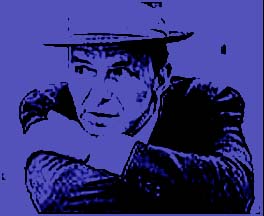
Frank Sinatra, the premier American pop
stylist and Chairman of the Board to his
legions of fans, died Thursday night of a
heart attack. He was 82.
The singer, who had stayed out of public
view since a heart attack last year, was
pronounced dead at 10:50 p.m. in the
emergency room of Cedars-Sinai Medical
Center in Los Angeles.
The son of Italian immigrants, Francis Albert Sinatra released over 200
albums in his 40-year career; 32 of them reached the top 10 of the
Billboard pop albums chart, while nine of his singles achieved similar
success on the Hot 100. Among his most popular hits were "Somethin'
Stupid," "That's Life," "Strangers In The Night," "Witchcraft," "Hey! Jealous
Lover," "Love And Marriage," and his signature song, "My Way." He was
presented with the Grammy's Lifetime Achievement Award in 1965.
Sinatra was a multitalented artist and businessman who segued into film
early in his career. His résumé included dozens of movies,
ranging from
musicals like "High Society" to such gritty dramas as "The Manchurian
Candidate." He was awarded an Oscar for best supporting actor for his
career-revitalizing role in "From Here To Eternity," and garnered another
Oscar nomination for his part in "The Man With The Golden Arm."
Sinatra was one of the first artists to own his own record company; he
sold
his label -- Reprise -- to Warner Bros. in 1963. He announced his
retirement from the music business in 1970, only to return three years
later.
He continued to record for another 22 years, achieving success with sundry
best-of collections and the two well-received "Duets" albums.
A private funeral is planned.
Biography
Sinatra was a master craftsman and ranked as one of
the most
influential singers in this country's history. In more than 200 albums,
his music led the evolution of Big Band to vocal American music.
Whether it was in song, on the silver screen or in nightclubs, few
could escape the charm of Ol' Blue Eyes. His voice carried over
countless phonographs, as lovers huddled listening to tunes like
"Try a Little Tenderness," "My Way," "I've Got You Under My
Skin" and "Strangers in the Night."
As a matinee idol, he appeared in blockbuster films such as "From
Here to Eternity," "The Man With the Golden Arm" and "The
Manchurian Candidate."
With some 1,800 music recordings, 60 film credits, nine Grammys
and an Academy Award, Sinatra was the grandmaster of
entertainment, an American icon of seeming immortality. He
recorded more top-40 albums than any artist: 51, three more than
Elvis Presley. And he holds an unrivaled record of longevity on
Billboard charts, where a Sinatra song was a fixture every week
from 1955 to 1995.
Or in the sing-song words of broadcaster Howard Cosell: "Frank Sinatra,
who has the phrasing, who has the control, who understands the composers;
who knows what losing means, as so many have, who made the great comeback,
who stands still -- eternally -- on top of the entertainment world.
Ladies and
gentlemen, from here on in, it's Frank Sinatra!"
From Hoboken to Hollywood
The son of an Italian immigrant fireman, Francis Albert Sinatra
started as a copyboy at a hometown newspaper in Hoboken, New
Jersey. Not content with a career in journalism he organized a
singing group, "The Hoboken Four." His father objected. "Singing
is for sissies," he said.
In 1937, Sinatra received his first break when he won first prize on
the "Major Bowes Amateur Hour" radio show. He was soon busy
with radio appearances and nightclub engagements. From 1939 to
1942 he fronted as a vocalist with the Harry James and Tommy
Dorsey bands, making $65 and $100 a week respectively.
It was with Dorsey that Sinatra developed his patented singing
style, marked by a careful phrasing of lyrics and long melodic lines.
Dorsey would glide through music with relative ease, he and his
trombone intertwined in romantic harmony. Young Frank took
note.
"The thing that influenced me most was the way Tommy played his
trombone. He would take a musical phrase and play it all the way
through seemingly without breathing for 8, 10, maybe 16 bars,"
Sinatra wrote in a 1965 Life magazine article. "It was my idea to
make my voice work in the same way as a trombone or violin."
Sinatra opted to go solo in 1942, and soon he emerged as
America's darling. An eight-week engagement at New York's
Paramount Theater led to enormous popularity on stage, on radio,
in nightclubs and in musical films. Admiring fans dubbed him "The
Voice."
To many, Sinatra personified the swinging times of post-World
War II America.
"It was a time where you brought a flower to your girlfriend, who
you were engaged to, and you sat down and swooned to Frank
Sinatra. It was a beautiful era," singer Tony Bennett once said.
Barbara Rush, Sinatra's co-star in the film "Come Blow Your
Horn," put it more precisely: "There was something about the man
larger than the man himself."
But by the early 1950s, Sinatra endured a number of hardships.
His longtime marriage to high school sweetheart Nancy Barbato
failed after his affair with actress Ava Gardner surfaced. Sinatra
married Gardner in 1951. The following year, his vocal cords
hemorrhaged and his career appeared finished, especially after his
talent agency, MCA, dropped him.
But Sinatra fought back. He begged Columbia Pictures to cast him
in Fred Zinnemann's 1953 film "From Here to Eternity." The studio
obliged, hiring him for a mere $8,000. He won an Oscar as best
supporting actor for his work.
In 1955, he was nominated for a best actor award for his
performance in "The Man with the Golden Arm."
The kudos kept rolling in. He scored big again in "Guys and
Dolls," acting alongside Marlon Brando. Meanwhile, his voice
returned to top form and his singing style matured. Within a few
years, he was a superstar in movies, TV and music -- his
popularity, enormous.
"I saw Sinatra and the pope on TV when I was 2 and said, 'Who's
that guy with Frank Sinatra?'" comedian Roseanne once quipped.
'You gotta love livin' baby'
Much like his casual on-stage swagger, Sinatra lived life with a
confident indulgence. He built one of the most important record
companies in the world, Reprise Records, which later merged with
Warner Brothers. And he accumulated millions, investing in various
business ventures, from industry and real estate to casinos and
racetracks. He acquired the nickname "Chairman of the Board of
Show Business." Twice more he married, to Mia Farrow and then
Barbara Marx.
His motto: "You gotta love livin' baby, 'cause dyin's a pain in the
ass."
Sinatra was often criticized for his quixotic tendencies. One minute,
he ate lunch with mobsters; the next, he was dining with the
president. A man with a hot temper and sometimes brash
demeanor, Sinatra barefisted photographers prying into his private
escapades on several occasions. Critics also derided him for his
unrelenting association with the underworld.
But, so too, Sinatra was known for his benevolence.
He took stars under his wing during the 1950s after
Hollywood blacklisted them. He also donated millions
to charitable causes.
"We lost track of how much he raised for charities around
the world -- way up in the millions," daughter Nancy once said.
His generosity won him the Jean Hersholt Humanitarian Award at
the 1971 Academy Awards. Shortly afterward, he announced his
retirement from entertainment world. And in June 1971, he
performed at what was billed his last public performance, ending
the show with the line: "Excuse me while I disappear."
But Ol' Blue Eyes couldn't stay away. He toured the nation with
Sammy Davis and Lizi Minnelli in the late 1980s and he turned out
another album, "Duets," in the early 1990s. President Ronald
Reagan awarded him with the Medal of Freedom, the highest
civilian honor. In 1994, he was honored at the Grammys with the
prestigious Legend Award for his lifetime of musical accomplishments.
Singer Vic Damone once said, "There will never be another Frank
Sinatra. He is all by himself with what he's done with his life as a
performer and as a man. He's had his ups and downs, but he really
is a great, great man."
More than anything, Sinatra left behind a legacy few will ever forget.
LOS ANGELES - Frank Sinatra was stricken by
a heart attack at his
Beverly Hills estate two hours before he died in the emergency room,
his death certificate showed.
The certificate signed by Dr. Jeffrey Helfenstein, the entertainer's doctor
for five years, provided only stark detail about Sinatra's final hours.
It
was obtained Monday by The Associated Press.
Two hours prior to death, the entertainer was at home when he was
stricken with acute myocardial infarction, commonly known as a heart
attack, and paramedics called to the residence rushed him to
Cedars-Sinai.
His wife, Barbara, was dining with friends at a nearby restaurant when
she was notified and she went to the hospital and stayed at his side until
death.
Thirty minutes before his death at 10:50 p.m. on May 14, Sinatra
suffered cardiorespiratory arrest - his heart and lungs stopped
functioning - while in the Cedars-Sinai Medical Center emergency
room, the county Department of Health Services document showed.
Sinatra was 82.
By The Associated Press
By IRVIN MOLOTSKY
WASHINGTON -- The FBI's 1,300-page file on Frank Sinatra, most of which
was released
Tuesday, contain old rumors about his ties to organized crime, details
about a youthful arrest
for seduction and adultery and new information about why he escaped military
duty in World War II:
a perforated eardrum and mental instability.
While the documents fail to answer many questions that dogged Sinatra for
much of his career, they
will provide grist for biographers and historians seeking to separate fact
from innuendo.
One fact emerged from a tip by gossip columnist Walter Winchell, who forwarded
to the FBI an
anonymous letter repeating a rumor that Sinatra had paid a $40,000 bribe
to doctors in New Jersey
in order to escape the draft.
After checking with the draft board in Jersey City, N.J., the FBI determined
that Sinatra had been
properly rejected as 4-F. An FBI agent related that "Sinatra's classification
appeared to be regular
and that he was disqualified because of a perforated eardrum and chronic
mastoiditis and that his
mental condition was one of mental instability."
In a draft board report, one examiner evaluating Sinatra had written:
"During the pyschiatric interview, the patient stated that he was neurotic,
afraid to be in crowds,
afraid to go in the elevator, makes him feel that he would want to run
when surrounded by people.
He had comatic ideas and headaches and has been very nervous for four or
five years. Wakens tired
in the a.m., is run down and undernourished. The examining psychiatrist
concluded that this selectee
suffered from pyschoneurosis and was not acceptable material from the psychiatric
viewpoint."
A Sinatra biographer, Michael Freedland, said Tuesday that the information
regarding Sinatra's
physical and psychiatric examinations was new.
Freedland, whose book "All the Way" was published this year by St. Martin's
Press, said: "It's
amazing that somebody who has 6,000 girls screaming at him at the Paramount
Theater in New York
could claim that he is disturbed by crowds. It is unbelievable. He thrived
on crowds."
The officer who supervised Sinatra's medical examination, Capt. Joseph
Weintrob, said that since
Sinatra was being rejected because of his hearing problems, "the diagnosis
of pyschoneurosis,
severe, was not added to the list" and that emotional instablity was substituted
because "this would
avoid undue unpleasantness for both the selectee and the induction service."
The FBI said it had withheld 25 pages and blacked out some passages in
the released material to
protect the privacy of third parties.
Sinatra saw the file well before his death on May 14 at the age of 82.
He had requested it under the
Freedom of Information Act in 1979 and 1980, and after he died the file
became available to others.
It was released Tuesday to journalists and others who had requested it.
The rumor concerning Sinatra and the draft led the FBI to gather information
concerning his arrest in
1938 on sex charges.
One FBI report said that, independent of the draft rumor investigation,
it had come to the bureau's
attention that Sinatra had a criminal record in Bergen County, N.J. From
the Bergen County Jail in
Hackensack, "there was obtained an enclosed picture of FRANK SINATRA and
the following
information regarding the two occasions on which SINATRA was held in the
Bergen County Jail,"
the report said.
"FRANK SINATRA, Arrest 42799, Bergen County Sheriff's Office, Hackensack,
New Jersey was
arrested on November 26, 1938 charged with Seduction. Disposition was marked,
'Dismissed.'.
FRANK SINATRA, Arrest 42977, was arrested on December 22, 1938, charged
with Adultery."
Neither of the acts with which Sinatra was charged is against the law today,
but his initial charge in
1938 stated that: "On the second and ninth days of November 1938 at the
Borough of Lodi" and
"under the promise of marriage" Sinatra "did then and there have sexual
intercourse with the said
complainant, who was then and there a single female of good repute." This,
the charge stated, was
"contrary and in violation of the revised statute of 1937."
The report noted that Sinatra was released on $1,500 bond and that the
complaint was withdrawn
when it was determined that the woman involved was married. A complaint
of adultery was
substituted, with Sinatra's bond being lowered to $500. That charge, too,
was dismissed.
Other parts of the FBI file concern Sinatra's links to mobsters. In one
report he is mentioned in
connection with his old friend Jilly Rizzo, as well as criminals like Aniello
Dellacroce, Carlo Gambino,
Joe Gallo and Anthony Carillo, in a case involving an effort to extort
$100,000 from a New York
stockbroker. Sinatra always denied involvement with mobsters and he was
never formally charged in
this or other cases.
The report says only that Sinatra joined Gambino and Rizzo in investing
$100,000 in a stock that
turned worthless. Sinatra, according to the material, told an FBI agent
that he had never heard of the
stock in question although the investment might have been made by his lawyer.
One section of the report reads:
"For the information of the Bureau, Aniello Dellacroce has been identified
as the 'underboss' of the
Carlo Gambino 'family' of La Cosa Nostra ." It further notes that "Frank
Sinatra has been identified
as the noted actor-singer."
There is no reference in the documents to Judith Campbell Exner, perhaps
because of the prohibition
against releasing information on third parties who are still alive. Ms.
Exner has said that she had a
relationship with Sinatra, and he introduced her to President John F. Kennedy,
and that she then
carried on simultaneous affairs with Kennedy and Chicago mob leader Sam
Giancana.
Another mob-related investigation concerned the Cal-Neva casino, in which
Sinatra held the majority
interest. The FBI was trying to determine whether Sinatra had made any
under-the-table payoffs in
order to get a loan from the teamsters union, which Sinatra denied.
The FBI report said: "SINATRA mentioned that DORIS DAY had secured a similar
type loan from
the Teamsters for a motel that she owns, and he had asked her if she had
had to cut anybody in, and
she advised that it was not necessary, that it was a straight loan."
It should come as no surprise that his draft board's medical examination
found the skinny singer
underweight, but just by four pounds. The examination confirms something
else: Ol' Blue Eyes,
indeed, had blue eyes.
(References by satisfied
customers)
|
|
|
|
|
|
SHAMEFUL
DISCLAIMER |