By NEIL STRAUSS
Ed McCurdy, a singer and songwriter who was a leading folk music
figure in the 1950's, died on March 23.
He was 81 and lived in Halifax, Nova Scotia.
At the height of the Depression, Mr. McCurdy left his family farm in
Willow Hill, Pa., at 18 to become a gospel singer in Manhattan. He slept
on floors and went days without food but always managed to pay for
voice lessons. He left Manhattan and traveled across the nation, working
as a gospel singer and announcer on various radio stations.
Influenced by Frank Sinatra, he decided to leave gospel for the secular
pop world and try his luck as a nightclub singer. He headed north this
time, working in Niagara Falls and Toronto. At a show in Vancouver, he
met a dancer who was celebrating her 20th birthday with her fiancée.
Three years later, that dancer became Mr. McCurdy's wife, Beryl.
In addition to his wife, he is survived by a son, Jim; two daughters, Dana
and Maggie; and three grandchildren, all of New York.
Mr. McCurdy received his first break when Sally Rand, the burlesque
queen, hired him to sing romantic baritone songs in her act.
Mr. McCurdy anticipated the revival of folk music and turned to it in the
mid-1940's.
In 1950 he performed in a series of shows at the Village Vanguard in
New York and released his first folk album, "Ed McCurdy Sings Songs
of the Canadian Maritimes." That year he also wrote "(Last Night I Had)
the Strangest Dream," in which he fantasized about a worldwide peace
agreement.
In 1954 Mr. McCurdy, then living in Manhattan, cemented his reputation
through a recording deal with Elektra Records, collaborating with Oscar
Brand and Jack Elliott on "Bad Men and Heroes." At the same time he
maintained a side career as an actor and announcer on children's
television shows. His album series of bawdy English songs, "When
Dalliance Was in Flower and Maidens Lost Their Heads," became a
campus favorite in the late 50's. Simon and Garfunkel, Johnny Cash, Arlo
Guthrie, the Weavers, Pete Seeger and Joan Baez recorded his songs.
As new voices and ideas took over the folk movement, his career began
to wane, though he remained an elder statesmen. In 1984 he moved to
Halifax, where he continued to record albums and perform on the folk
circuit and made a new career for himself as a character actor on
Canadian television dramas.

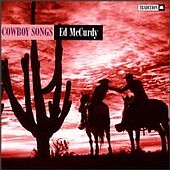
 -- Ed
McCurdy discography
-- Ed
McCurdy discography