|
|
|
|
|
|
SHAMEFUL
DISCLAIMER |
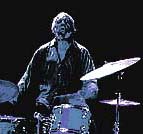 Obituary
Denis Charles, who brought a Caribbean hand-drumming style into the contexts of straight-ahead and freely intuitive jazz, died on March 26 at his home in Manhattan. He was 64.
The cause was heart failure brought on by influenza.
Mr. Charles was an influential figure among the improvising musicians of New York's Lower East Side. Even when Mr. Charles played within the most abstract musical contexts, it was possible to hear his West Indian background in his tuned drums. His patterns were not fussy, and he always sounded original. There was an airiness and a sprightly simplicity that recalled march and dance rhythms, a quality he shared with his friend and contemporary, the New Orleans-bred jazz drummer Edward Blackwell.
Mr. Charles grew up on St. Croix in the Virgin Islands and was educated at St. Patrick's Catholic school by Belgian nuns. His family was musical, tending toward percussion instruments, and when Mr. Charles was 9, he was playing bongos with a popular island group called the Rhythm Makers.
In 1945 he moved to Harlem with his two brothers to live with his mother. Before long he was playing congas and bongos with his brother Frank in calypso bands. But Mr. Charles was more strongly drawn to jazz, specifically by the drummers Roy Haynes and Art Blakey. In 1952 he met the pianist Cecil Taylor at Connie's, a jazz club in Harlem; he became a steady member of Mr. Taylor's groups from 1955 to 1960, contributing to the epochal records "Jazz Advance," "Looking Ahead!" and "The World of Cecil Taylor."
Mr. Charles was a busy freelancer, never staying in one band for long, though he kept a fairly sustained presence in groups led by Wilber Morris, Billy Bang, Jemeel Moondoc and Joel Forrester. He made some memorable recordings, among them his album based on Caribbean folk songs, "Queen Mary" (Silkheart, 1989); it was one of the best recordings to come out of New York's jazz underground in the 1980's.
Mr. Charles was to travel to Mali in April and return to St. Croix in July for an island festival. The second album under his name, "Captain of the Deep" (Eremite), was released on the day he died.
He is survived by two brothers, Frank (Huss) Charles and Sylvain (Wes) Charles, both of Manhattan; a daughter, Arkah LaCharles of Brooklyn, and his father, Frank Charles Sr. of St. Croix.
Note: Corrections have been incorporated into the body of the above article by Barri Anne Brown and Melanie MacLennan.
(b. 4 December 1933, St. Croix, Virgin Islands, d. 26 March 1998).
Charles moved to New York in 1945 but his roots are nevertheless Caribbean. He began by playing congas in calypso and mambo bands. He taught himself on the drum kit and a year later (1955) was playing in Harlem with Cecil Taylor and recorded on the pianist's first album. In 1957 he played at the Newport Jazz Festival with Taylor, Steve Lacy and Buell Neidlinger and in 1961 performed with Taylor and Archie Shepp in the Living Theatre production of THE CONNECTION. In 1962 he supplied calypso beats for Sonny Rollins. Unfortunately the theme of THE CONNECTION (heroin addiction) proved a little too close to home and Charles dropped out of the music scene for over a decade. He re-emerged as one of the Jazz Doctors, an ensemble that included Billy Bang and Frank Lowe, in the early '80s. In 1982 he recorded BANGCEPTION, a delightful duet album, with Bang on violin. Charles's incisive, regular time is a perfect foil to wildmen like Taylor and Bang, having the imagination and suppleness to both answer and contain them. Later recordings with Bang's quartet ( VALVE NO. 10) and new alto saxophonist Rob Brown ( BREATH RHYME) were capped by his own debut as leader on 1991's QUEEN MARY.

|
|
|
|
|
|
SHAMEFUL
DISCLAIMER |
|
|
